Why Are Car Prices Lower in Germany? A Model-by-Model Comparison with Turkey
We put German and Turkish prices for the Sandero, Duster, i20, Clio, Golf, and Corolla side by side, and worked out how much of the gap comes from ÖTV tax versus trim levels and the exchange rate.
Why Are Car Prices Lower in Germany? A Comparison with Turkey
Everyone in Turkey has heard the line: "that same car costs half as much in Germany." This article replaces the guesswork with numbers. We placed current German list prices (Bruttolistenpreis, including 19% VAT) alongside our negotiated Turkish dealer prices, and separated how much of the gap comes from tax versus differences in trim.
The comparison uses the August 20, 2026 rate of 1 EUR = 56.13 TRY. Turkish figures come from the current dealer data on our Negotiated Dealer Prices page.
Model-by-Model Price Comparison
| Model | Germany (entry trim) | TRY equivalent | Turkey dealer price | Difference |
|---|---|---|---|---|
| Dacia Sandero Stepway | €15,190 | 852,600 TRY | 1,540,000 TRY | +81% |
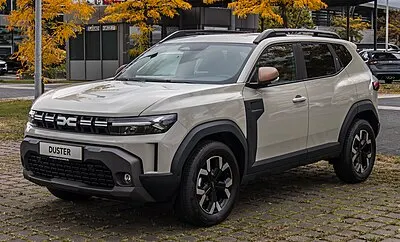
| Dacia / Renault Duster | €18,990 | 1,065,900 TRY | 1,630,000 TRY | +53% |
| Hyundai i20 | €20,300 | 1,139,400 TRY | 1,550,000 TRY | +36% |
| Renault Clio | €24,200 | 1,358,300 TRY | 1,699,000 TRY | +25% |
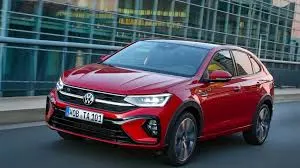
| Volkswagen T-Cross | €24,960 | 1,401,000 TRY | 1,775,000 TRY | +27% |
| Volkswagen Golf | €28,330 | 1,590,200 TRY | 2,250,000 TRY | +42% |
| Toyota Corolla | €33,340 | 1,871,400 TRY | 1,790,000 TRY | -4% |
Even at a glance the table says three things: the gap is not the same for every model, the largest gaps appear on the cheapest cars, and at the bottom of the list the gap reverses entirely.
The Real Source of the Gap: ÖTV
Germany levies no special consumption tax on cars; only 19% VAT is added on top of the price. In Turkey, ÖTV (special consumption tax) is applied first, and then 20% VAT is applied on top of the ÖTV-inclusive amount. The passenger car brackets in force under Presidential Decision No. 10115 of July 24, 2025 are:
| Engine displacement | Tax base (excl. ÖTV) | ÖTV rate |
|---|---|---|
| 1,400 cc and below | up to 650,000 TRY | 70% |
| 1,400 cc and below | 650,000 - 900,000 TRY | 75% |
| 1,400 cc and below | 900,000 - 1,100,000 TRY | 80% |
| 1,400 cc and below | above 1,100,000 TRY | 90% |
| 1,400 - 1,600 cc | up to 850,000 TRY | 75% |
| 1,400 - 1,600 cc | 850,000 - 1,100,000 TRY | 80% |
| 1,400 - 1,600 cc | 1,100,000 - 1,650,000 TRY | 90% |
| 1,400 - 1,600 cc | above 1,650,000 TRY | 100% |
| Electric (under 160 kW) | up to 1,650,000 TRY | 25% |
| Electric (under 160 kW) | above 1,650,000 TRY | 40% |
Let us tax the same car in both countries. Suppose the manufacturer's pre-tax price is the equivalent of 800,000 TRY and the car is under 1,400 cc:
- Germany: 800,000 + 19% VAT = 952,000 TRY
- Turkey: 800,000 + 75% ÖTV = 1,400,000 TRY, plus 20% VAT = 1,680,000 TRY
With an identical pre-tax price, the sticker differs by 76%. In Turkey 52% of that price is tax; in Germany, 16%. So the answer to the question is largely a single line item: the gap is not about Germany being cheap, it is about Turkey's tax structure. For a detailed breakdown, see our article on ÖTV Changes and Their Effect on Car Prices.
Why Isn't the Gap the Same for Every Model?
Back to the table: the Sandero shows 81%, the Clio 25%. There are three reasons.
1. ÖTV is tiered, so cheap cars are penalised proportionally harder. Although the brackets raise the rate as the tax base rises, an entry-segment car already starts at 70-75% ÖTV. Because the car's own cost is low, the weight of tax within the final price is far more visible than it is on an expensive model.
2. The entry trim in Germany and the entry trim in Turkey are not the same car. In Germany the €12,790 Sandero is a 67 hp, manual, near-bare vehicle. The car sold under the same name in Turkey is automatic and LPG-equipped. The same applies to the Golf: the German €28,330 price is for the 1.5 TSI Life, while the 2,250,000 TRY in our table is the R-Line. In a low-volume market, Turkish distributors simply do not import stripped trims, because tax has already pushed the price up and buyers reason that if they are paying that much, they may as well get the loaded version.
3. Local production does not change ÖTV, but it removes logistics and currency risk. That is why the Corolla comes out cheaper in Turkey than in Germany: it is built in Sakarya, with no import cost and no currency pressure. On top of that, the Corolla is sold only as a hybrid in Germany, while the 1,790,000 TRY Vision Plus in Turkey is petrol. So the "-4%" on that row is not a strict like-for-like comparison, but it does clearly show the effect of local production on price. You can see current trims and prices on our Toyota Corolla page.
So Is Importing a Car from Germany Worth It?
Seeing the gap and concluding "then I will import one" is bad arithmetic, because the ÖTV on a car entering Turkey is collected at the border:
- On new car imports, ÖTV and VAT are collected at customs according to the brackets above. Even if you reclaim the German VAT, the price advantage largely evaporates the moment Turkish tax applies.
- For used cars from abroad, individual imports are effectively impossible; the exception is limited to the vehicle exemption granted to people who have lived abroad for at least 24 months and are returning permanently, and that right carries its own age, displacement, and timing conditions.
- Driving on foreign (MA/MZ) plates is not a purchase method; it is a regime allowing residents abroad to use their car temporarily in Turkey, and the car must leave the country when the period expires.
In short, the price gap is real, but there is no legal shortcut for an individual to pocket it. If you are looking for a price advantage domestically, more realistic routes are: collecting quotes across dealers (Negotiated Dealer Prices), looking at electric models whose ÖTV starts at 25% (Electric Cars), and, if you qualify, reviewing the ÖTV-Exempt Vehicles list.
Conclusion
- The gap with Germany ranges from 25% to 81% depending on the model; there is no single "half price" figure.
- Most of the gap is ÖTV: the same pre-tax price lands on the Turkish sticker roughly 76% higher.
- The rest comes from trim strategy; the German entry price often belongs to a stripped version never sold in Turkey.
- On locally produced models (Corolla, Togg, Egea) the gap closes, and can even reverse.
For all current Turkish prices see our Vehicles page, and use our Compare tool for model-by-model reviews.
Frequently Asked Questions
How much cheaper are cars in Germany compared with Turkey?
At the August 2026 rate (1 EUR = 56.13 TRY) the gap ranges from 25% to 81% by model. It is 81% on the Dacia Sandero Stepway and 25% on the Renault Clio. On the locally built Toyota Corolla, the Turkish price is actually about 4% below the German one.
Why are car prices low in Germany?
Germany levies no special consumption tax on cars — only 19% VAT is added. Turkey applies ÖTV of 70-100% first, then 20% VAT on the ÖTV-inclusive amount. A car with an identical pre-tax price therefore ends up roughly 76% more expensive on the Turkish sticker.
Is it profitable to import a car from Germany to Turkey?
Usually not. On new car imports, ÖTV and VAT are collected at customs under Turkish rates, so the price advantage largely disappears. Importing a used car from abroad is only possible under the vehicle exemption granted to people who lived abroad for at least 24 months and are permanently returning.
Sıfır Fiyatlar Editör
Sıfır Fiyatlar's editorial team compiles and regularly updates current price lists, campaigns, and buying guides for Turkey's automotive market.